

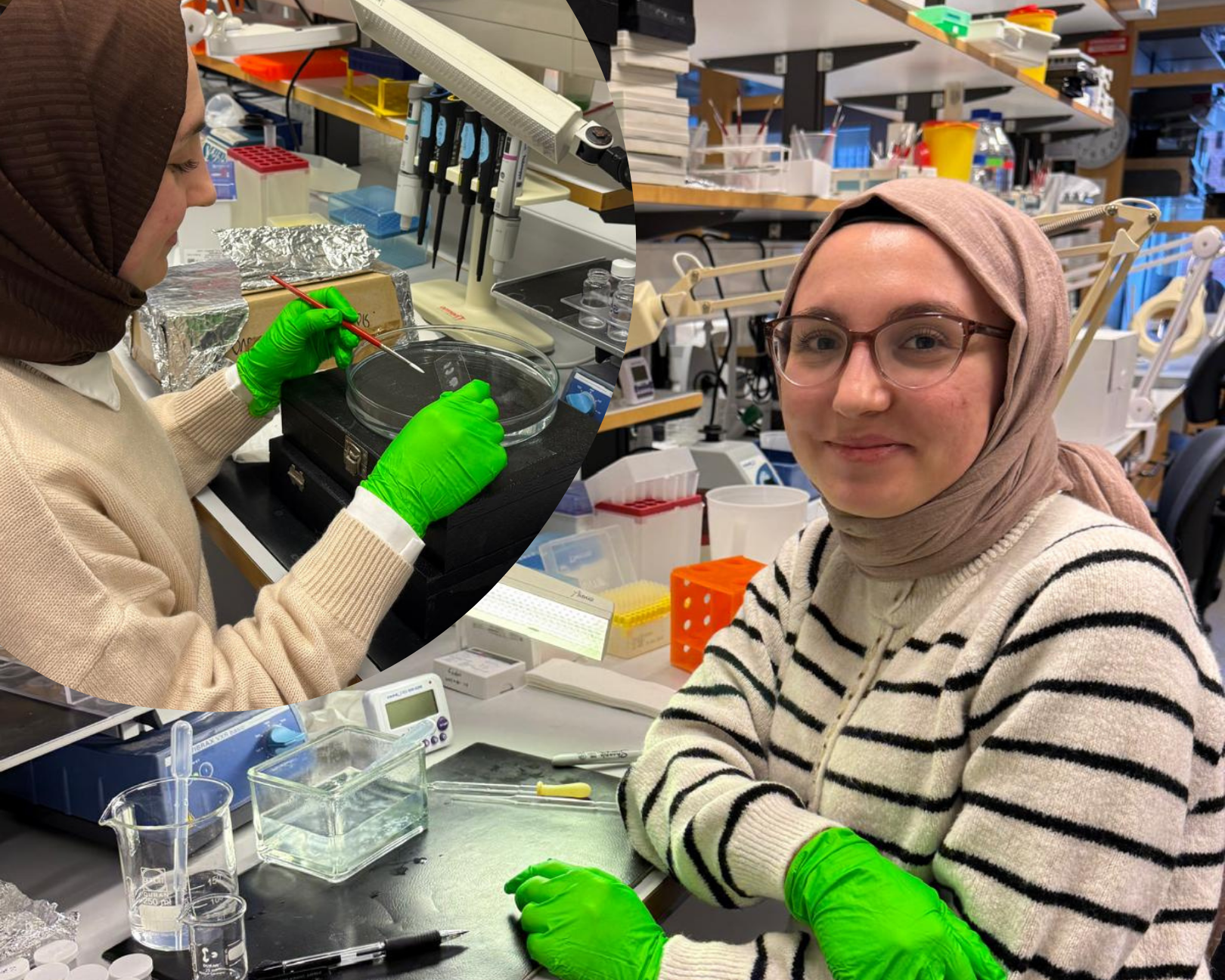
Under the GEMSTONE Project, Nursima Mutlu, a young researcher from Acibadem Mehmet Ali Aydinlar University (ACU), undertook a two-month research visit to Lund University’s (ULUND) prestigious Brain Repair and Imaging in Neural Systems (BRAINS) research centre. From 7 October to 7 December 2024, Ms. Mutlu collaborated with Assoc. Prof. My Andersson and the BRAINS team to investigate cortical layer development in neurodevelopmental processes, focusing on comparative studies between GAERS and Wistar rats.
During her time in Lund, Ms. Mutlu, who is a PhD student in neuroscience at ACU, conducted experiments involving immunofluorescence staining to examine cortical layer markers. Her work targeted both adult and 21-day-old GAERS and Wistar rats. Initially, she tested antibodies such as Cux1 and Complexin3 using immunohistochemical staining (IHC), a process not previously implemented at ACU. This innovative step will now enhance future experimental protocols at ACU. Ms. Mutlu also received training on using a microtome for sectioning brain tissues, a technique differing from ACU’s cryostat-based method. This hands-on experience broadened her technical expertise and highlighted procedural adaptations necessary for different research environments.
In her experiments, Ms. Mutlu performed double immunofluorescent staining trials with Brn2 and Cux1 antibodies to determine optimal antibody dilutions. Upon completing test trials, experimental groups were stained and imaged using a Zeiss Apotome2 fluorescence microscope. Ms. Mutlu, after receiving training on the device, captured all images herself, ensuring consistent microscope settings across all groups. To maintain methodological rigor, the ULUND team emphasized simultaneous staining of all experimental groups or dividing them into smaller groups if necessary.
Another set of experiments involved Cux1 and Complexin3 double immunofluorescence staining. Following similar procedures, Ms. Mutlu determined appropriate antibody dilutions and stained all groups simultaneously. Images were then captured at 10x magnification in various brain regions, including the upper and deep layers of the somatosensory and motor cortices. These images were analysed using the Qupath application, a tool recommended by the ULUND team. Ms. Mutlu received training on Qupath from the team, with image thresholds collaboratively determined alongside Assoc. Prof. Andersson.
Beyond the technical advancements, Ms. Mutlu valued the cultural and professional exchange afforded by her visit. She expressed gratitude to Prof. Filiz Onat and the GEMSTONE Project for enabling this transformative experience, which allowed her to gain new perspectives, laboratory skills, and insights from collaborating with an international team. Her work at ULUND not only strengthened her individual expertise but also contributed to GEMSTONE’s mission of advancing neurodevelopmental research.