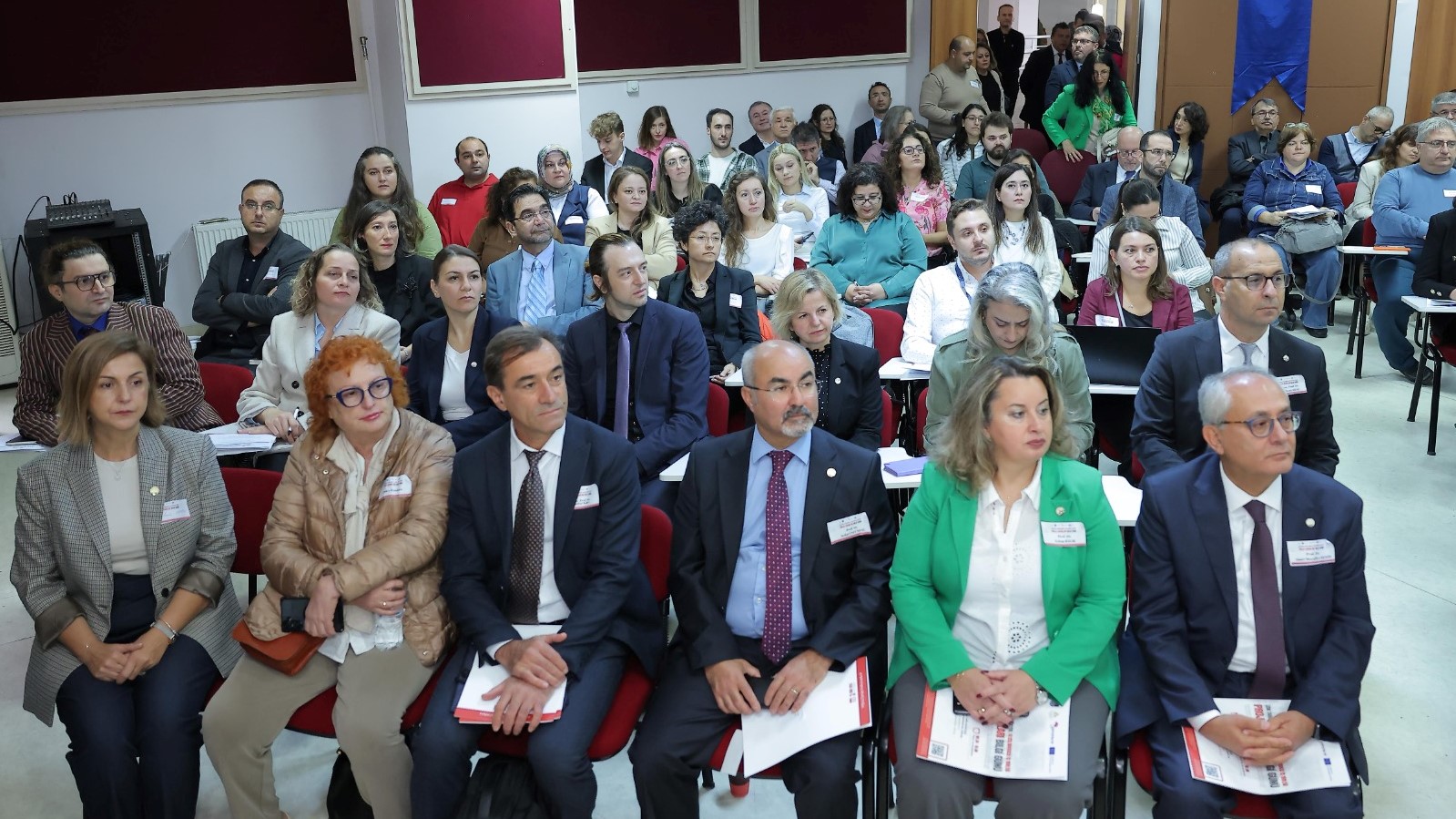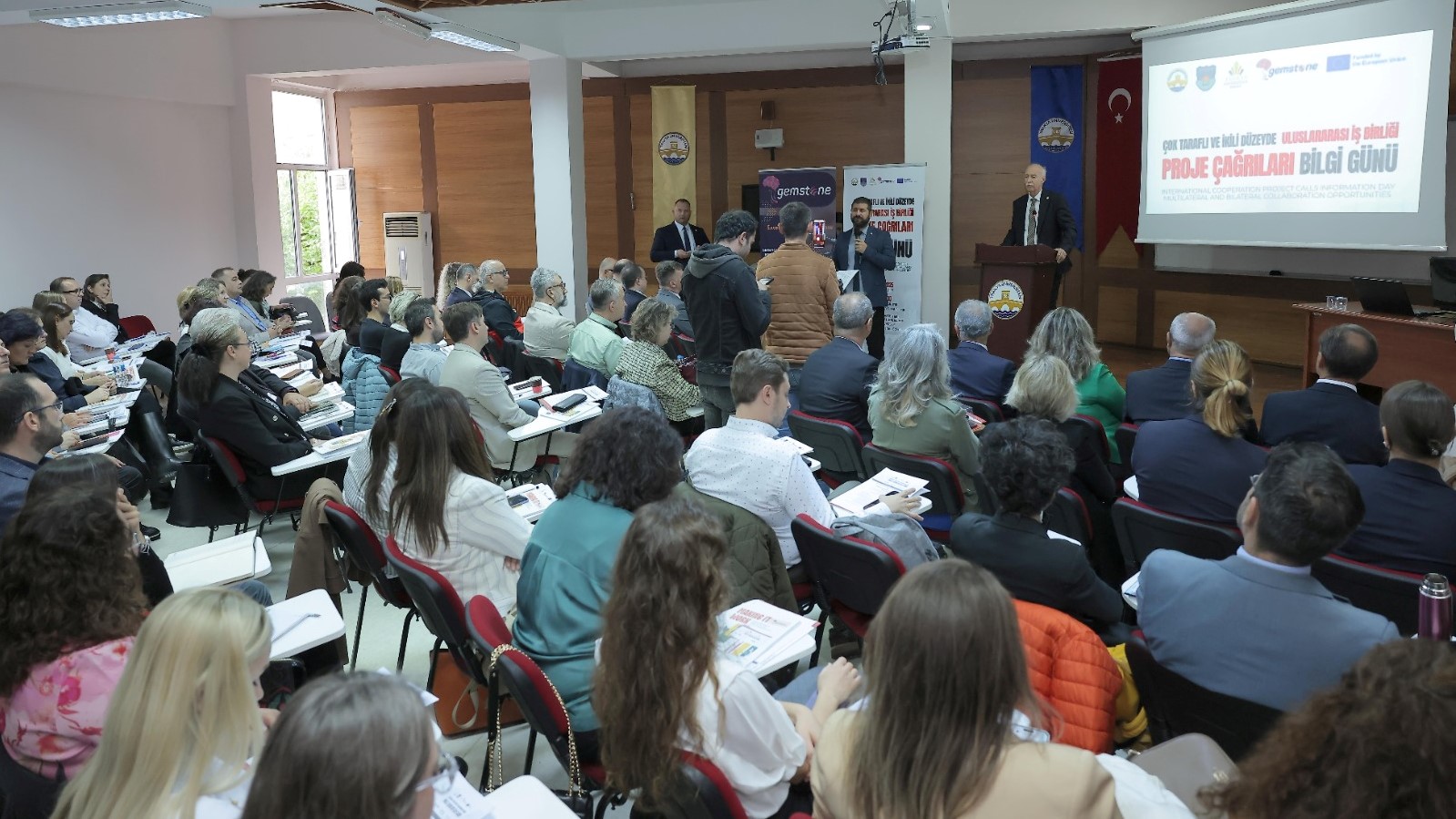
Within the scope of the Horizon Europe-funded GEMSTONE Project at Acıbadem Mehmet Ali Aydınlar University (ACU), a high-level joint event titled “International Cooperation Project Calls Information Day: Multilateral and Bilateral Collaboration Opportunities” was successfully organized in partnership with Trakya University’s (TU) Project Coordination Application, and Research Centre.
The event brought together national and international stakeholders – including the Scientific and Technological Research Council of Turkey (TÜBİTAK), the Thrace Universities Association (TUA), and several Balkan universities – to foster dialogue, exchange knowledge, and explore new paths for scientific cooperation.
Held on 3 October 2025 at Trakya University’s Millet Kıraathanesi in Edirne, Turkey, the event aimed to provide researchers, research managers, and policymakers with up-to-date insights on international funding opportunities, including Horizon Europe, bilateral and multilateral cooperation schemes, and TÜBİTAK support mechanisms. In doing so, the meeting served as a significant step toward building stronger regional partnerships and promoting the active participation of Turkish and Balkan institutions in European research frameworks.
A milestone in regional collaboration
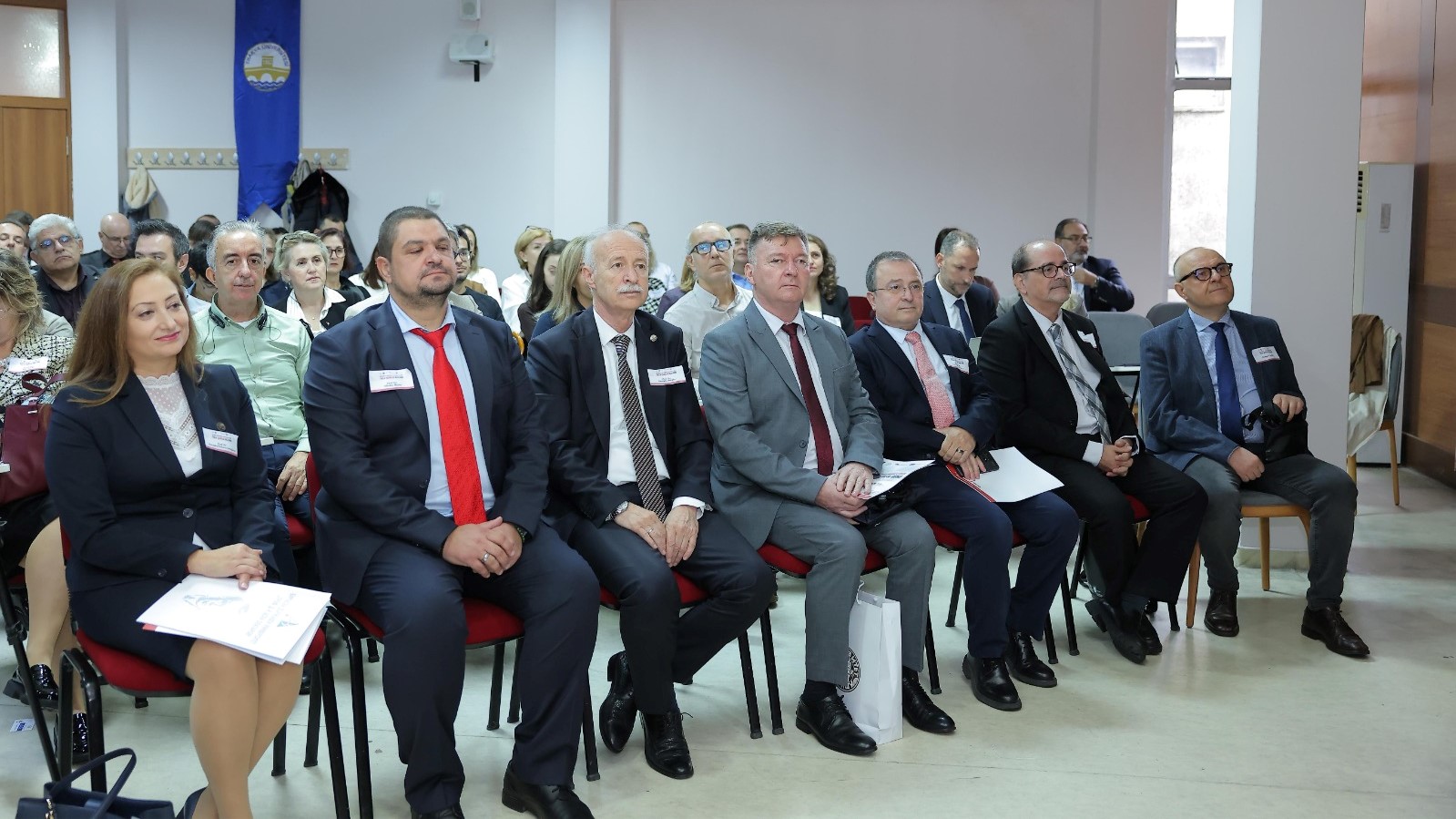
The event marked the first major outcome of a newly established partnership between TU and ACU – an alliance in which the GEMSTONE Project has played a key facilitating role. This collaboration aims to enhance mutual engagement in international research programmes, contributing to GEMSTONE’s overarching mission of capacity building, knowledge transfer, and dissemination of research management excellence across Widening countries.
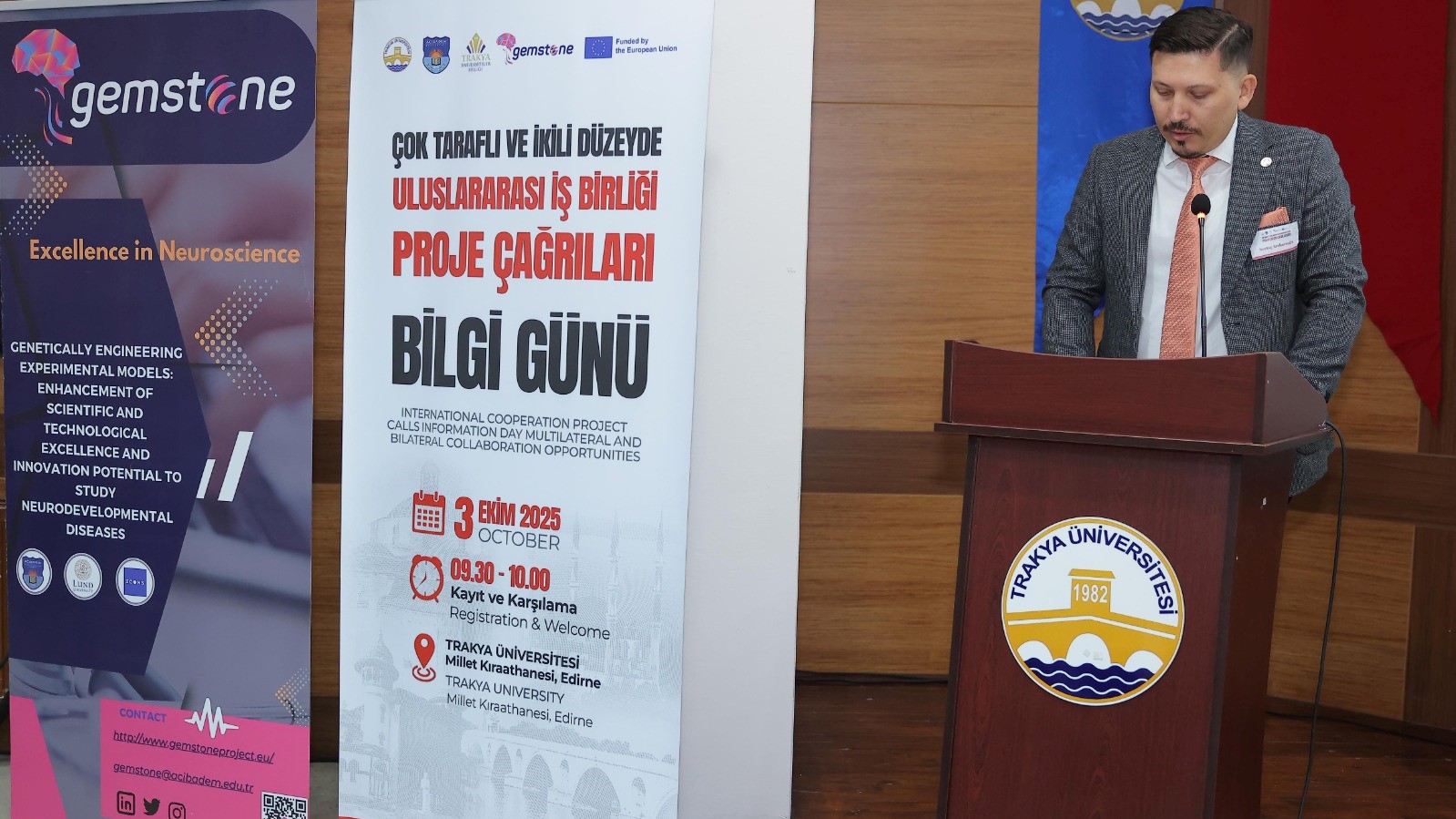
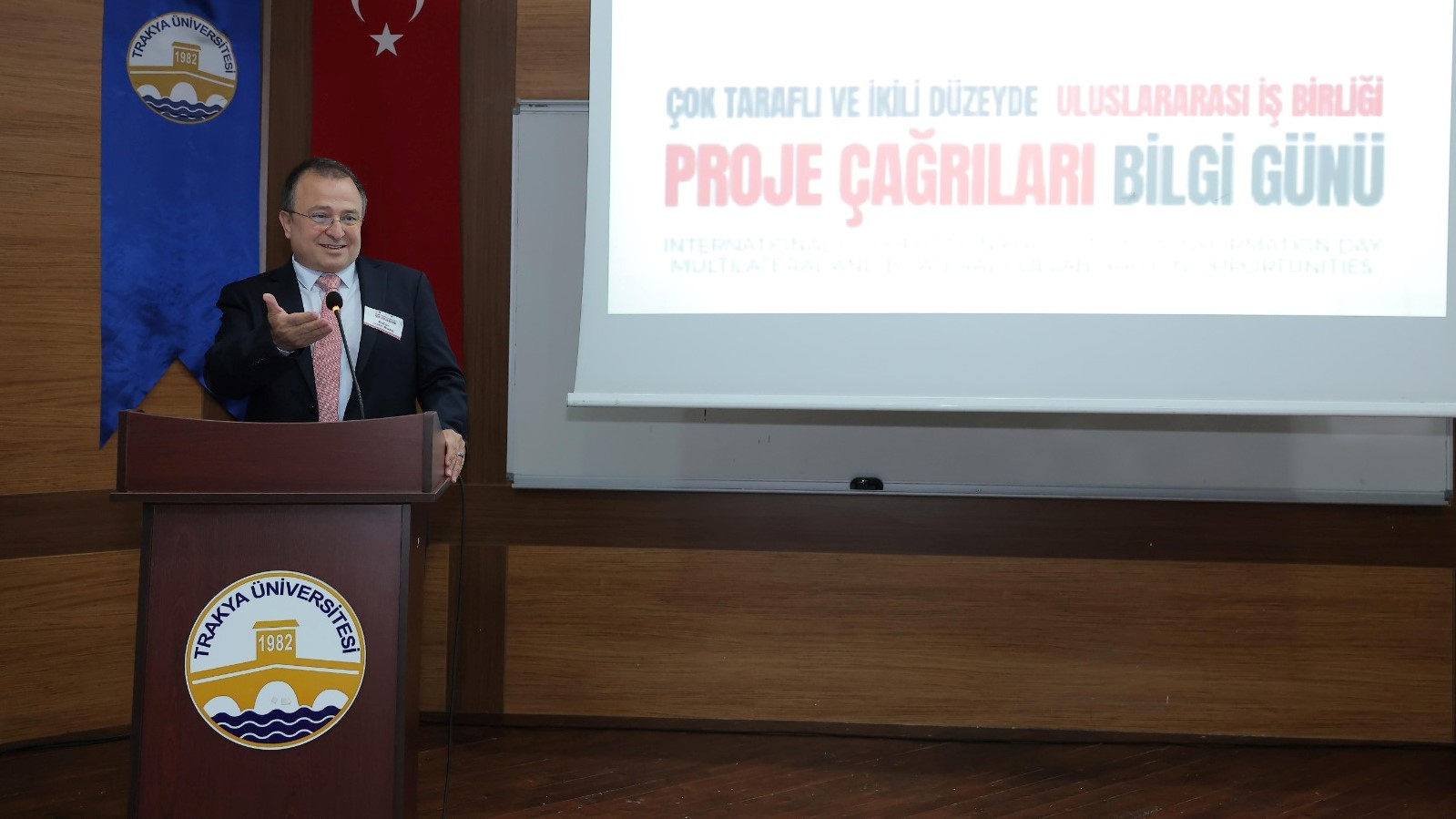
In his opening remarks, Assoc. Prof. Sertaç Arabacıoğlu, Director of TU’s Project Coordination, Application and Research Centre, welcomed participants and emphasized the value of academic collaboration in addressing shared regional and global challenges. The honorary opening session featured speeches from distinguished university leaders, including Prof. Levent Altıntaş (Vice-Rector and GEMSTONE WP6 Leader, ACU), Prof. Konstantinos Diamantaras (Vice-Rector for Internationalization, International Hellenic University), Prof. Stoyanka Petkova-Georgieva (Director of National and International Cooperation, Burgas State University “Prof. Assen Zlatarov”), Prof. Nikolay Marin (Rector, South-West University “Neofit Rilski”), Prof. Jovan Stepanovic (Rector, University of Nis), and Prof. Mustafa Hatipler (Rector, TU).
Knowledge sharing and GEMSTONE dissemination
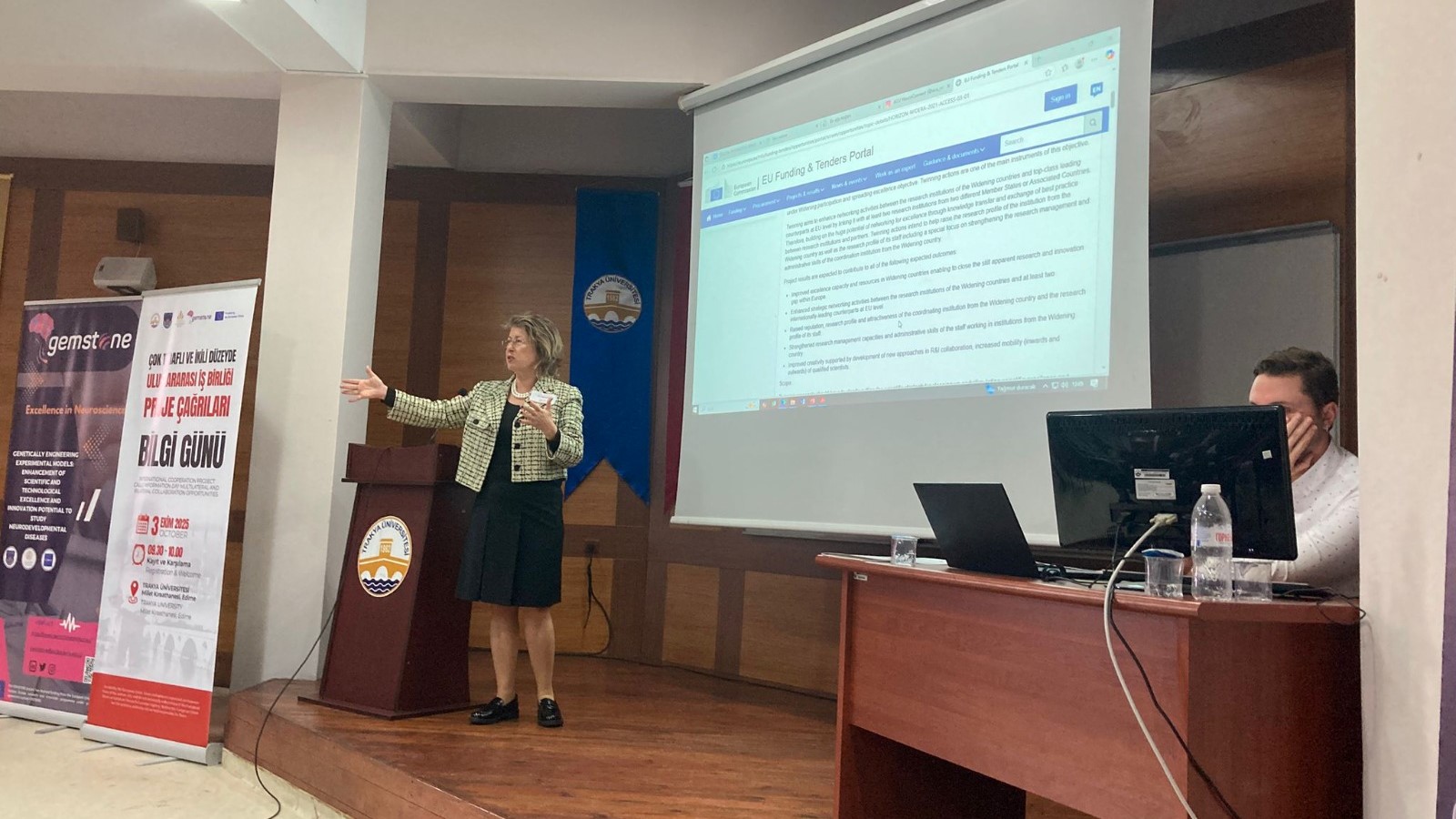
The information sessions featured presentations by TÜBİTAK experts Dr. M. Merve Polat and Umut Ege, who provided detailed overviews of Horizon Europe, EU Framework Programmes, and TÜBİTAK’s international cooperation mechanisms.
One of the highlights of the day was the special GEMSTONE session, titled “Making It Work: GEMSTONE Project’s Better Practices for Horizon Europe Newcomers.” The session showcased GEMSTONE’s contributions to institutional capacity building and best practices for successful participation in Horizon Europe.
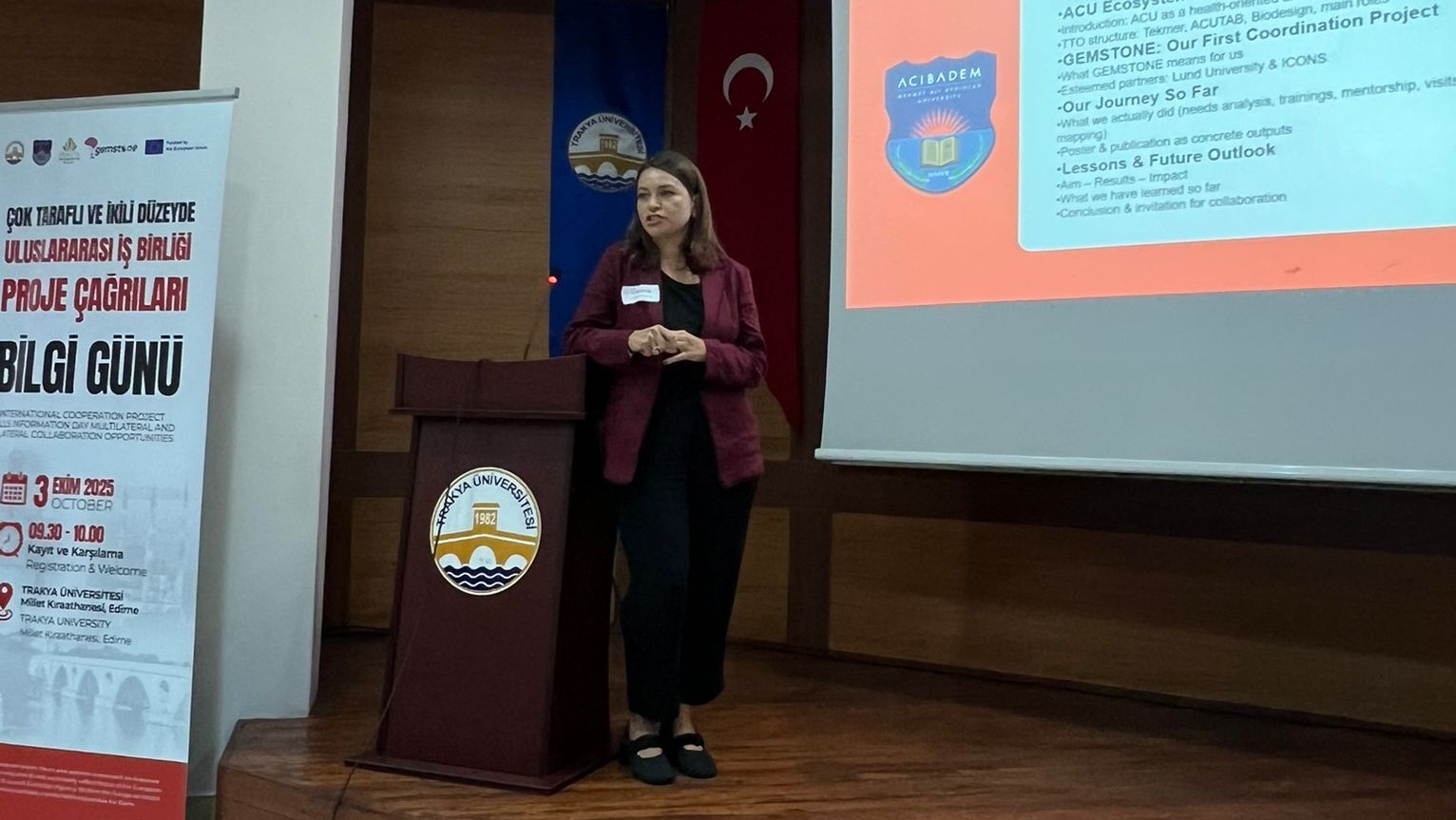
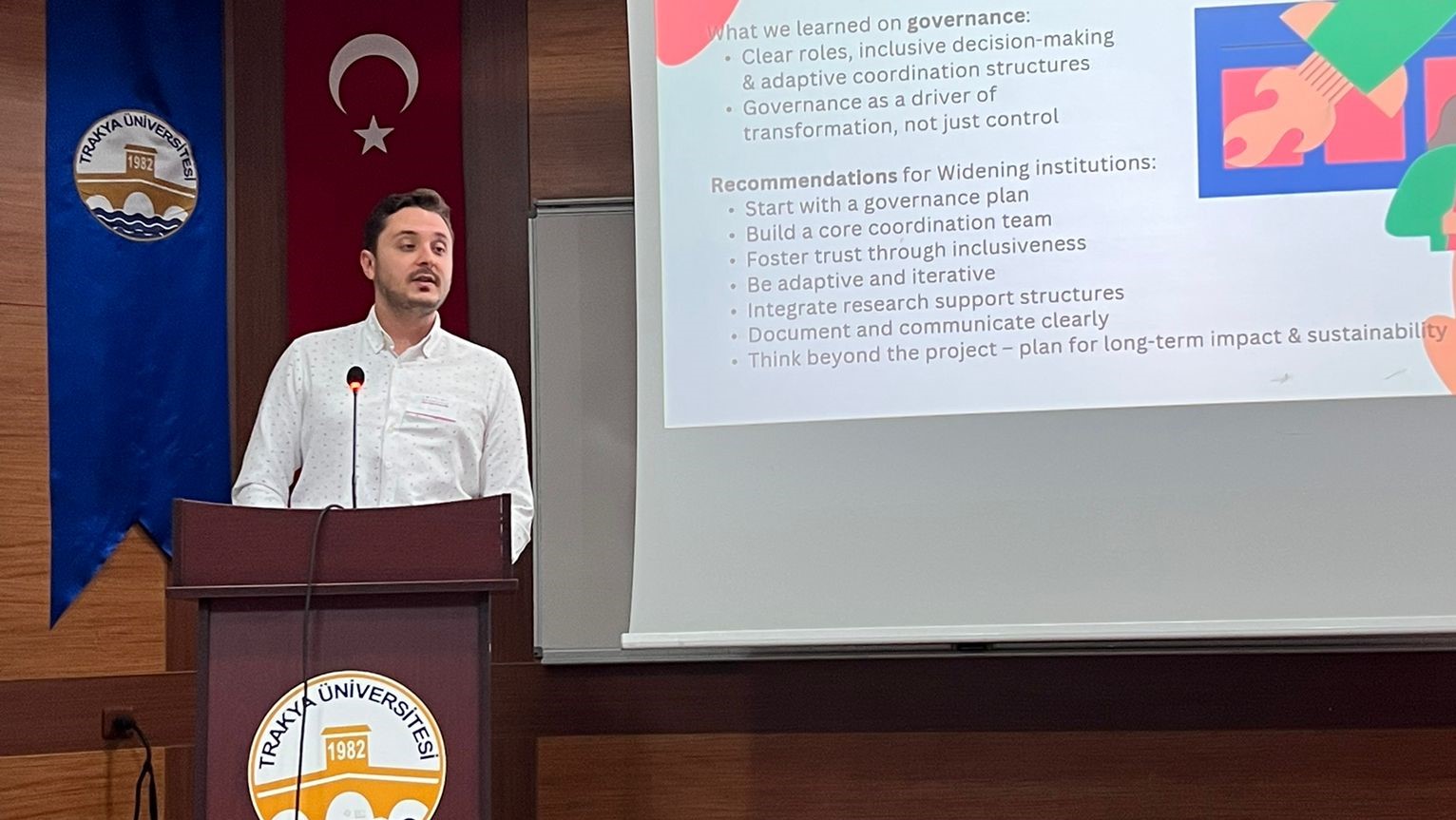
ACU’s Prof. Filiz Onat, GEMSTONE Principal Investigator, shared invaluable insights and lessons learned from the project’s preparation, consortium building, and implementation phases. Dr. Cansu Akın Levi, ACU Technology Transfer Office Specialist, introduced the ACU research and innovation ecosystem, highlighting GEMSTONE’s role in enhancing excellence in research support services. Cem Öztürk, GEMSTONE Project Manager, presented the project’s flagship publication, “Making It Work: GEMSTONE Project’s Better Practices for Horizon Europe Newcomers,” and disseminated printed copies among participants to promote broader engagement in international research frameworks.
Workshops and partner-matching sessions
Following the plenary sessions, participants took part in parallel workshops and partner-matching activities.
The first workshop focused on joint initiatives in health education between ACU, TU, and South-West University, identifying new avenues for academic cooperation. The second workshop, held under the Bilateral Cooperation Programme with the Bulgarian Academy of Sciences, explored technical collaboration topics such as chitosan modifications, bed cover performance tests, and patenting processes, featuring participation from ACU, TU, and Burgas State University.
The TUA partner-matching workshop further showcased successful examples of EU-funded projects and best practices from Balkan universities. Notably, TU’s “Maritsa Timeless Journey” IPA Bulgaria-Turkey CBC Project and an Erasmus+ KA220-HED project were presented as models of regional cooperation.
Cultural engagement and networking
The programme concluded with an evaluation session and continued the following day with an optional cultural tour of Edirne, offering participants the opportunity to explore the city’s historical and scientific heritage, including visits to TU’s Karaağaç Campus, the Art Gallery, the Natural Science Museum, and the Sultan Bayezid II Health Museum – a UNESCO-recognized site symbolizing the region’s deep connection to medicine and education.
Impressive participation and impact
The event attracted 123 participants, representing a diverse mix of national and international institutions. Among them were TÜBİTAK (2 participants), TU (99), ACU (4), South-West University (6), University of Nis (3), International Hellenic University (2), Burgas State University (1), Trakya Teknopark (2), Ecostar & Ecodense (2), and the Edirne Promotion and Tourism Association (1). When categorized by institution type, the participants included 2 representatives from research councils, 104 from national universities, 12 from international universities, 4 from the private sector, and 1 from the NGO sector.
In terms of participant profile, the group comprised 11 rectors and vice-rectors, 12 research directors, 10 research managers and specialists, 76 senior researchers, and 14 junior researchers. This rich composition reflected a strong commitment across all levels of academia and research administration to enhancing international cooperation and scientific networking, and demonstrated the growing momentum for regional collaboration in research and innovation. It also underlined GEMSTONE’s success in building bridges between institutions in Turkey and the Balkans.
Building momentum for future cooperation
The ACU delegation – Prof. Levent Altıntaş, Prof. Filiz Onat, Dr. Cansu Akın Levi, and Cem Öztürk – actively engaged in bilateral meetings and networking sessions throughout the day, reinforcing existing partnerships and exploring new collaborative initiatives.
As part of GEMSTONE’s mission to strengthen institutional capacity and foster excellence in international research management, this event served as a concrete example of how strategic partnerships can drive meaningful change across the Widening region.
“We thank all national and regional researchers, research managers, and policymakers from Widening institutions for joining us in Edirne to build momentum towards stronger scientific cooperation in Europe and beyond.” said Prof. Onat, GEMSTONE Principal Investigator.